What's the difference between a boring minimalist wedding and a beautiful one?
Beautiful minimalism is deeply intentional, not accidental. It starts with a carefully chosen palette of 2–3 colors, high-quality materials throughout, and every element earned its place through deliberate design thinking. Boring minimalism is just empty with no real choices behind the restraint.
Minimalism isn't about doing less; it's about choosing thoughtfully and skipping anything that doesn't serve. A beautiful minimalist wedding has impact from clarity: crisp white linens, one statement accent color on flowers or lighting, natural wood or polished concrete. Every element should feel selected, not defaulted. The difference shows in materials, thick paper invitations, quality champagne, one lush flower arrangement per table. Think about texture: smooth concrete, soft fabrics, natural wood grain. These details create richness without clutter. Boring minimalism happens when you strip everything away without replacing it with intention. You're left with white walls and crickets.
Is a minimalist wedding actually cheaper than a traditional one?
Not really. Minimalist weddings can be very affordable if you're comfortable with simple basics, or quite expensive if you're investing in high-end, carefully selected pieces. The actual savings come from skipping décor entirely, not from cutting corners on quality.
A truly minimal ceremony, white seating, no florals, one statement piece, saves money. You're skipping hundreds in decoration. But minimalist doesn't mean cheap. Quality matters more when every element is visible. Premium concrete venues, designer furniture, high-end catering presented simply, specialty paper, these add up. Some couples spend more on fewer, better things. Others embrace the affordability of stripping away florals and rental décor. The key decision is: do you want simple and affordable, or simple and thoughtful? Simple and affordable means white linens, no flowers except a simple bouquet. Simple and thoughtful means custom invitations, a high-end venue, carefully selected tableware.
What does a minimalist ceremony actually look like?
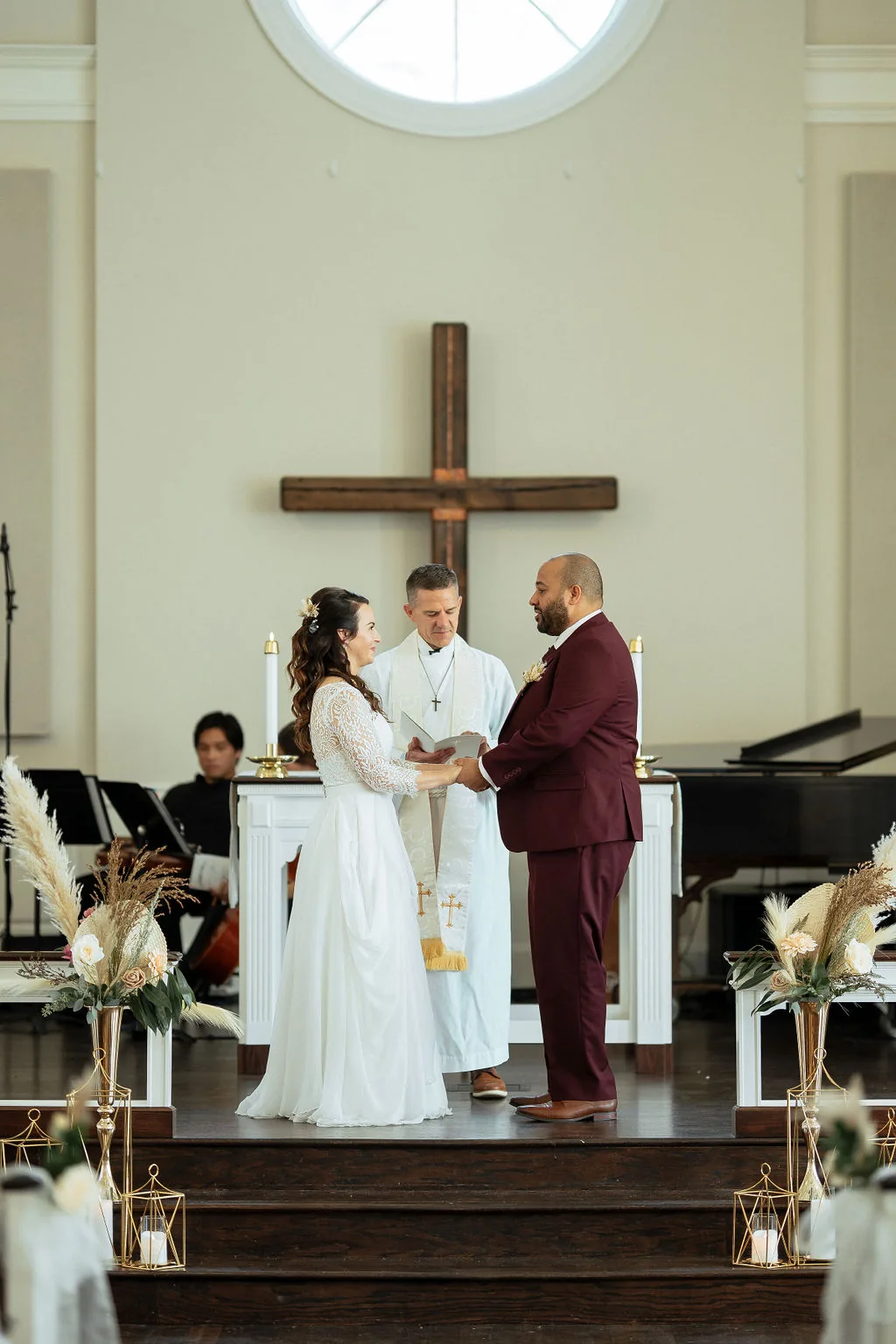
Clean sightlines, minimal florals (perhaps a simple arch or one thoughtful statement piece), no aisle decorations, and clear ceremony structure with nothing that's just filler. Guests sit facing the couple without visual clutter, and everything present serves a clear, intentional purpose.
A minimal ceremony is visually calm and focuses the eye on what matters, the couple and the moment. Instead of lining the aisle with flowers, you might have a simple wooden arch, draped greenery, or absolutely nothing, letting the venue's natural background speak powerfully. Seating is often white or natural wood chairs, arranged in clean lines. A small, significant bouquet and matching boutonnières are typical, quality over quantity. No decorative elements "just because", no aisle runners, no pew bows unless they mean something specific to your story. The ceremony program is simple, maybe a single-sheet card. Music is straightforward: prelude, processional, recessional. The officiant and couple are the focus, visually and emotionally.
How do you dress up minimalist reception tables without losing the aesthetic?
Start with white or natural-tone linens, natural wood chairs for warmth, one small meaningful centerpiece per table, and simple place settings. Embrace negative space as design. Let the table breathe. Quality materials and single-color coordination do the visual work and create real elegance.
Minimalist tables aren't empty; they're thoughtfully chosen and composed. Start with white or natural linen tablecloths. White or wood chairs (not multiple colors). Place settings are simple: one plate, clear glassware, minimal silverware. Centerpieces are key: maybe a single tall vase with three branches, or a small succulent, or an empty vintage bottle. One piece per table, not a cluster. The empty space around it is part of the design. Napkins match the color palette (white, cream, one accent color). Everything that's there is because it matters. Some couples add a single printed menu or a clean calligraphy card. The quality of materials stands out.
What makes a minimalist wedding invitation feel elegant rather than cold?
Use quality paper, generous white space throughout, readable typography, and one meaningful detail, maybe a single color accent or texture. Skip unnecessary embellishment; let the paper quality and clean design speak and convey intentionality.
A great minimal invitation uses thick cardstock, a single accent color, and clean typography. Maybe a deckled edge or watercolor wash in your accent color, a single line illustration, or embossed text. The white space is intentional, it's not that you didn't include anything; it's that you chose not to. The hierarchy is clear: couple's names large, event details easy to scan, RSVP simple. Some minimal invitations include a single insert card in a coordinating color. Others are one card with all info. Avoid clip-art images, multiple fonts, or cramming information. Quality cardstock signals luxury immediately. A single meaningful detail differentiates it.
How should you brief your photographer about capturing a minimalist aesthetic?
Tell them the vibe is calm, uncluttered, and detail-focused. Ask them to emphasize clean compositions, use negative space effectively, and capture textures, materials, light, shadows, surfaces. Avoid busy group shots when possible, and focus on intimate, intentional framing.
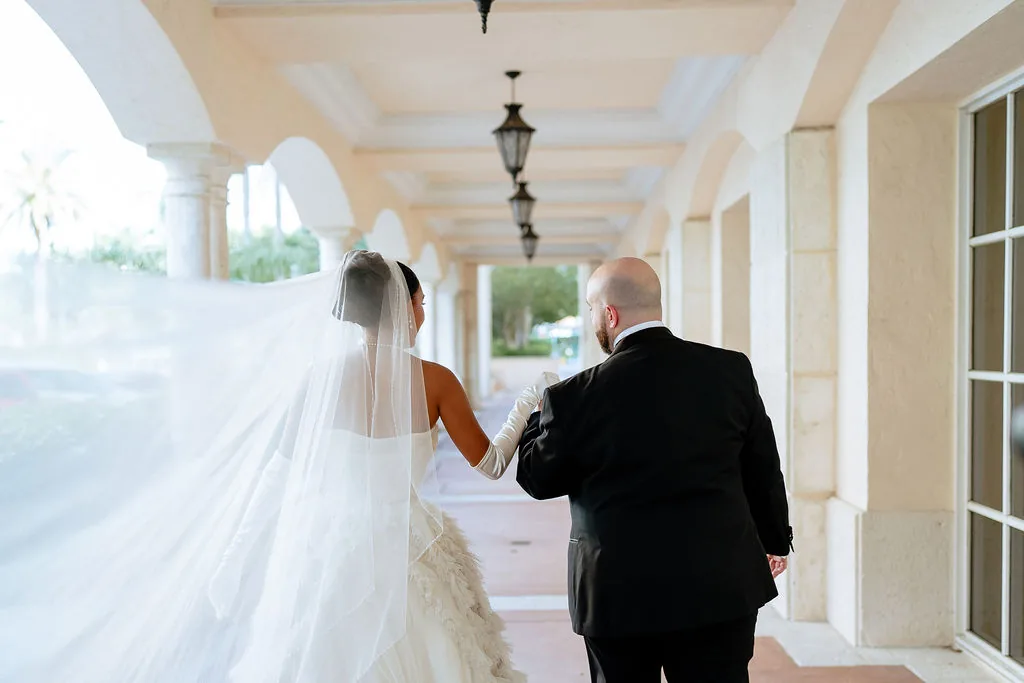
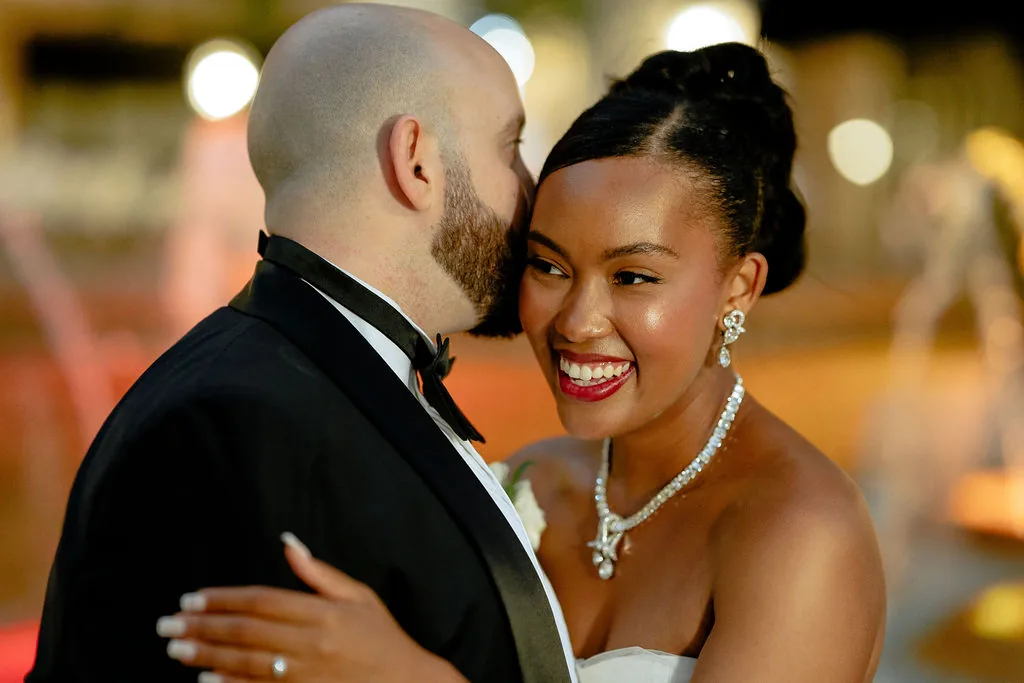
Minimalist weddings require photographers who understand negative space and composition. Tell your photographer: "We want calm, clean images. Use empty space in your frames. Capture light and shadows. Focus on detail, hands, fabrics, faces." With minimal décor, the couple and emotions become the focal point. Your photographer should position themselves to avoid including clutter in backgrounds. Tight framing matters more, clean close-ups of rings, hands, faces. Wide shots are more dramatic with minimal backgrounds (natural walls, clear skies, empty venues). Some photographers shoot more black-and-white or desaturated color. Ask them to prioritize quality over quantity.