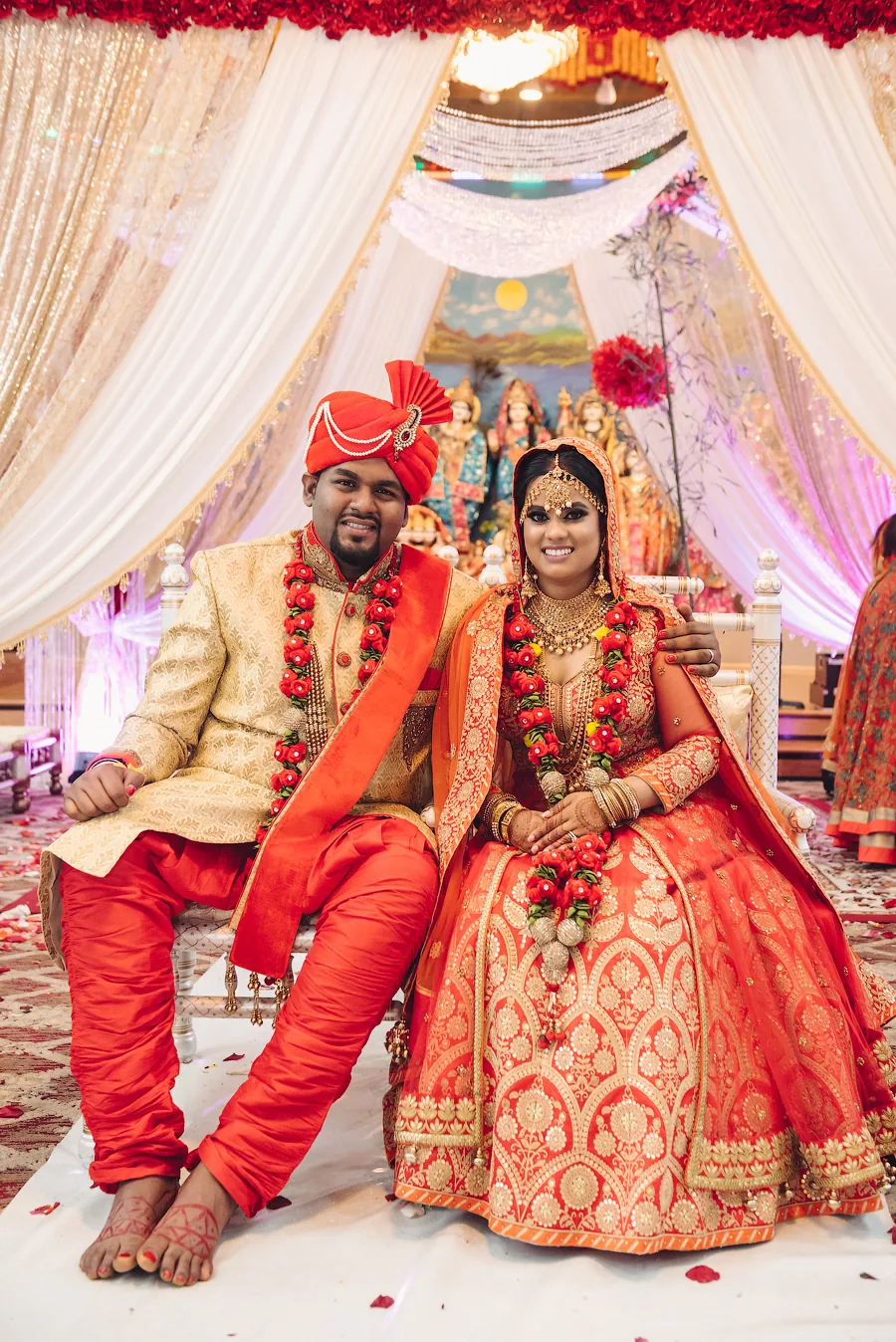
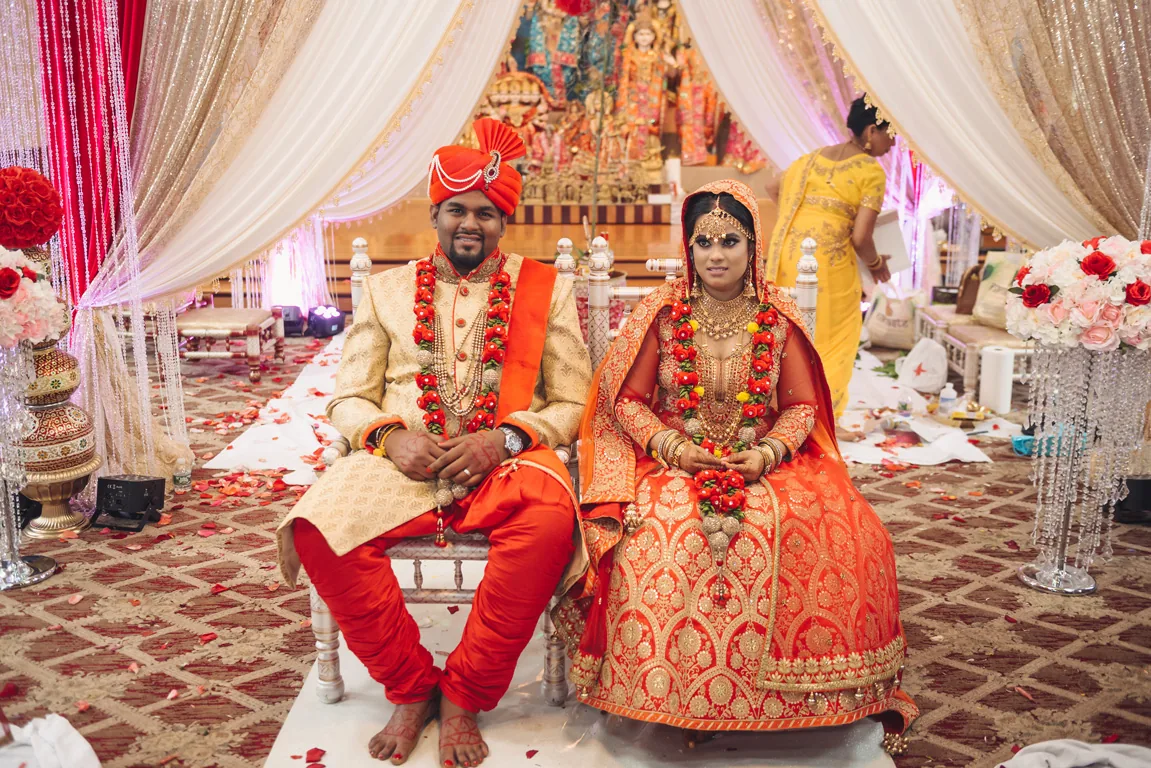
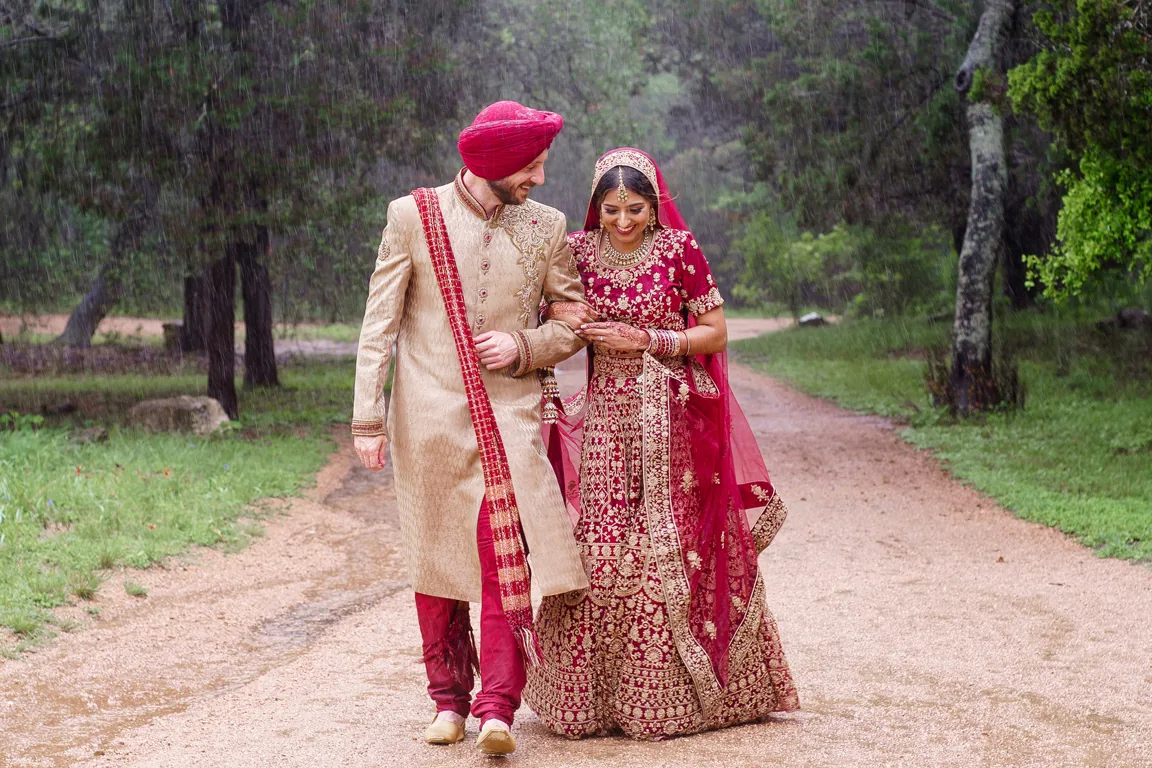
A South Asian wedding is not one event, it is three to five, and each one lights differently. A haldi or a mayun in the morning throws turmeric and marigold across everyone, so we shoot loose and fast to hold the color without blowing out a highlight. A midday baraat under open sun, the groom on the ghodi or coming in behind the dhol, will blow out faces if you meter for the sky, so we expose for skin and let the background go where it wants. A mandap glows under a floral canopy and warm bulbs that read heavy amber on camera, and a mehndi or sangeet stage runs colored gels that fight your white balance all night. We shoot fast glass and several bodies at once, so nothing gets missed while the family dances your couple in.
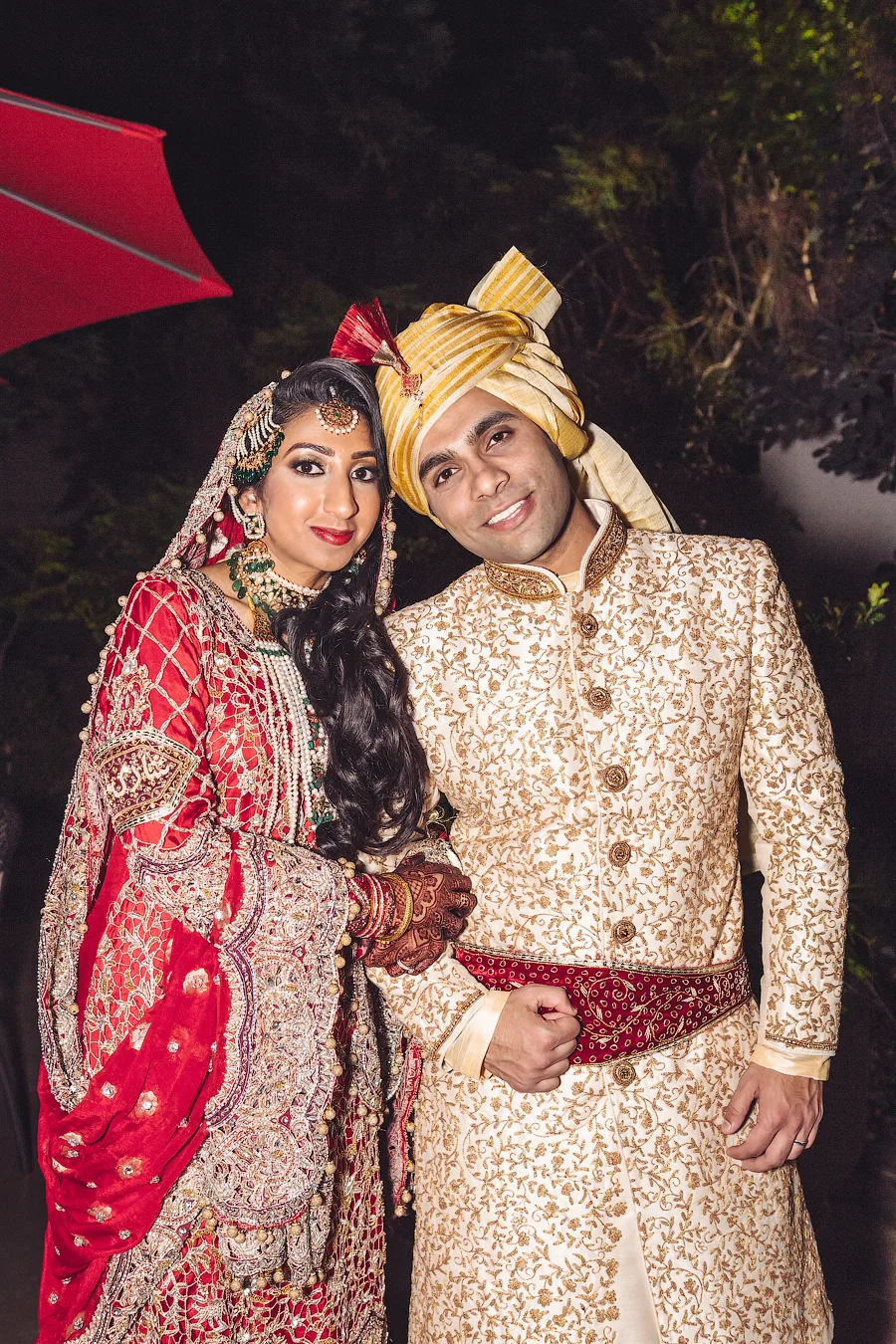
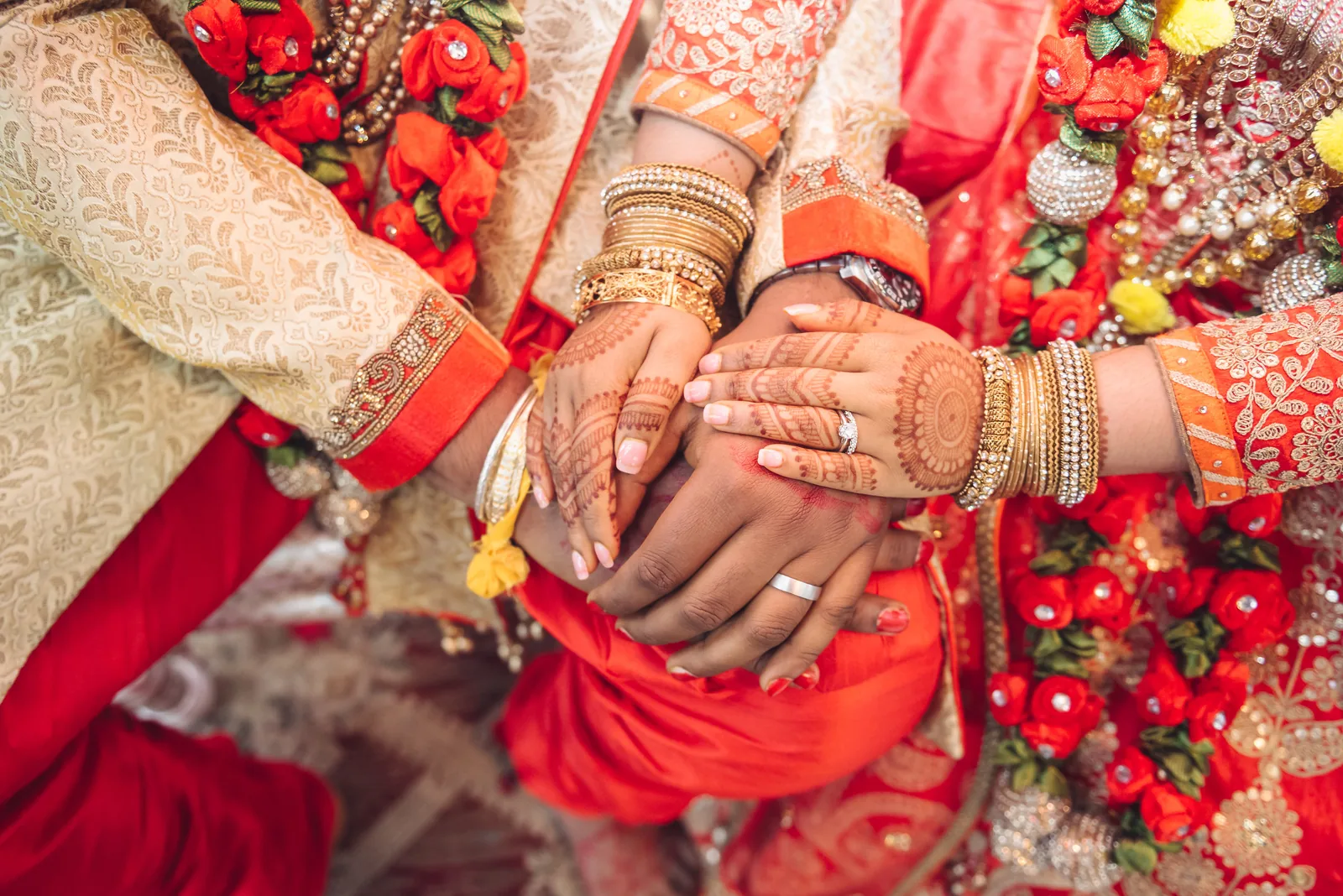
We have covered hundreds of these celebrations across the New York, New Jersey, and DC corridor, Hindu, Sikh, and Muslim, and we know where the real pictures live. The milni at the gate when the families meet for the first time. The varmala, garlands going back and forth while someone lifts the groom out of reach. At a Hindu ceremony it is the pheras around the agni, at a Sikh anand karaj it is the laavan around the Guru Granth Sahib, and at a nikah it is the moment the qazi asks for the qubool and the whole hall leans in to hear it. We watch for the arsi mushaf, when the couple first see each other in the mirror, and the joota chupai, when the sisters make off with the sehra. And we are there for the vidaai or the rukhsati at the end, when the bride leaves her family and no one is holding it together. We do not wait to be told these moments are coming.
Several photographers and a video team work every event, backup cameras and lenses are scheduled for each day, and one White Glove concierge builds the full timeline with your planner so coverage lines up with the schedule instead of chasing it. Take a look at the portfolio, and if you are planning a South Asian wedding, Hindu, Sikh, or Muslim, let us talk.