The Hidden Skills of Wedding Photographers
You can teach someone to use a camera in a week. You cannot teach them to run a wedding day in a week. Most of the job is the second thing.
After 15 years and thousands of weddings, we've noticed that the photographers who deliver consistently great galleries aren't always the ones with the best gear or even the best eyes. They're the ones who can read a room, hold a timeline together, and handle six small fires before lunch.
Here's what the camera work actually sits on top of.
Reading the room
The first hour of a wedding tells you everything. Which family member is the peacemaker. Which is the flight risk. Which bridesmaid is going to need a pep talk before the ceremony. Which parent is going to overshare at cocktails.
A photographer who can read this in the first hour adjusts the entire day's coverage. A photographer who can't is going to miss frames.
This isn't a soft skill. It's the difference between being where the best frames happen and being one room over.
Gear can catch a frame. Judgment puts you where the frame will be.
Timeline judo
Wedding timelines slip. Makeup runs 20 minutes long, the officiant is stuck in traffic, the first look gets delayed because nobody can find the bride's father. Every wedding has some version of this.
A good photographer doesn't panic and doesn't blame. They quietly compress the portrait block, move the family photos indoors to beat the rain, or suggest cutting the cocktail-hour solo portraits because we'll get better ones at sunset anyway.
You don't notice this is happening. That's the point.
Handling difficult people, calmly
Every wedding has at least one difficult person. An uncle who won't stop photo-bombing. A maid of honor with an agenda. A mother-in-law who wants to direct the family portraits personally.
The photographer who can redirect them without creating a scene is worth their fee twice over. The one who gets into an argument with a guest cost you the wedding. Pick accordingly.
Being invisible on purpose
Most of the coverage on a wedding day is shot while the photographer is actively working to not be noticed.
This is harder than it sounds. Cameras are loud. Good photographers learn to anticipate moments so they can raise the camera before anyone looks at them, not in reaction. They shoot from angles that don't block the aisle. They don't chase. They don't over-direct during the reception.
Couples who say "we didn't even notice you were there" are paying the highest compliment. It means the photographer was doing the hardest part of the job well.
Knowing when to stop shooting
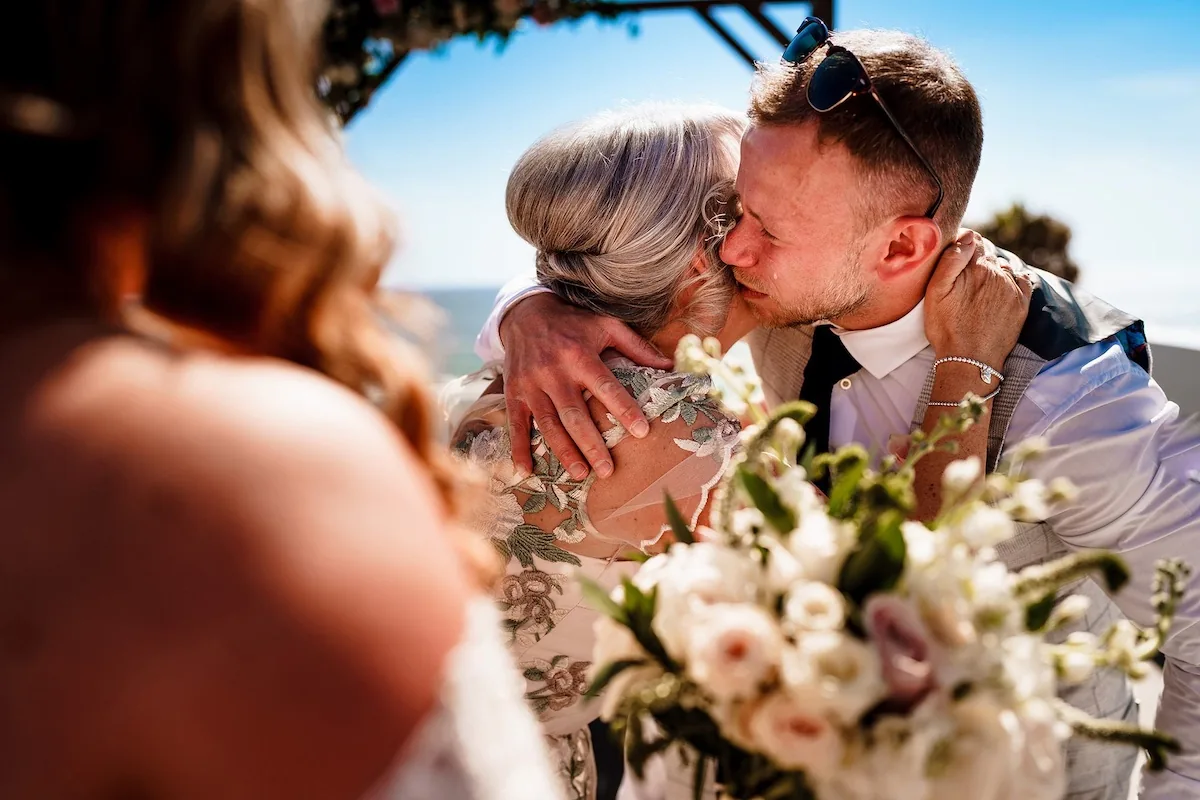
The best photographers stop shooting during emotionally heavy moments — when a parent is giving a speech that's visibly hard for them, when a grandparent is saying something privately to the couple — for the first 20 seconds. The shutter click breaks the moment. You shoot the result of the moment, not the moment itself.
This is counterintuitive for couples booking coverage. You're paying per hour; you want frames per minute. But restraint is part of the craft. A photographer who shoots through a raw emotional moment at eight frames per second ruins it for everyone in the room.
What this means when you're booking
Portfolio shots tell you whether the photographer can shoot. They don't tell you whether the photographer can run a wedding day.
Reviews tell you more. Specifically: reviews that mention the photographer being calm under pressure, good with difficult family members, or quietly keeping the day on schedule. Those are the reviews that matter.
A camera is the cheapest part of wedding photography. The judgment is what you're actually paying for.
Planning your wedding?
Get a personalized quote from our team